Silang, Cavite Etymology

The name of Silang (originally called Silan) originates from Tagalog silang, meaning "mountain pass."
Special credits: https://www.youtube.com/watch?v=bVAFumvIroY
Church in town: 𝐃𝐢𝐨𝐜𝐞𝐬𝐚𝐧 𝐒𝐡𝐫𝐢𝐧𝐞 𝐚𝐧𝐝 𝐏𝐚𝐫𝐢𝐬𝐡 𝐎𝐟 𝐍𝐮𝐞𝐬𝐭𝐫𝐚 𝐒𝐞𝐧̃𝐨𝐫𝐚 𝐝𝐞 𝐂𝐚𝐧𝐝𝐞𝐥𝐚𝐫𝐢𝐚 (𝐃𝐢𝐨𝐜𝐞𝐬𝐞 𝐨𝐟 𝐈𝐦𝐮𝐬)
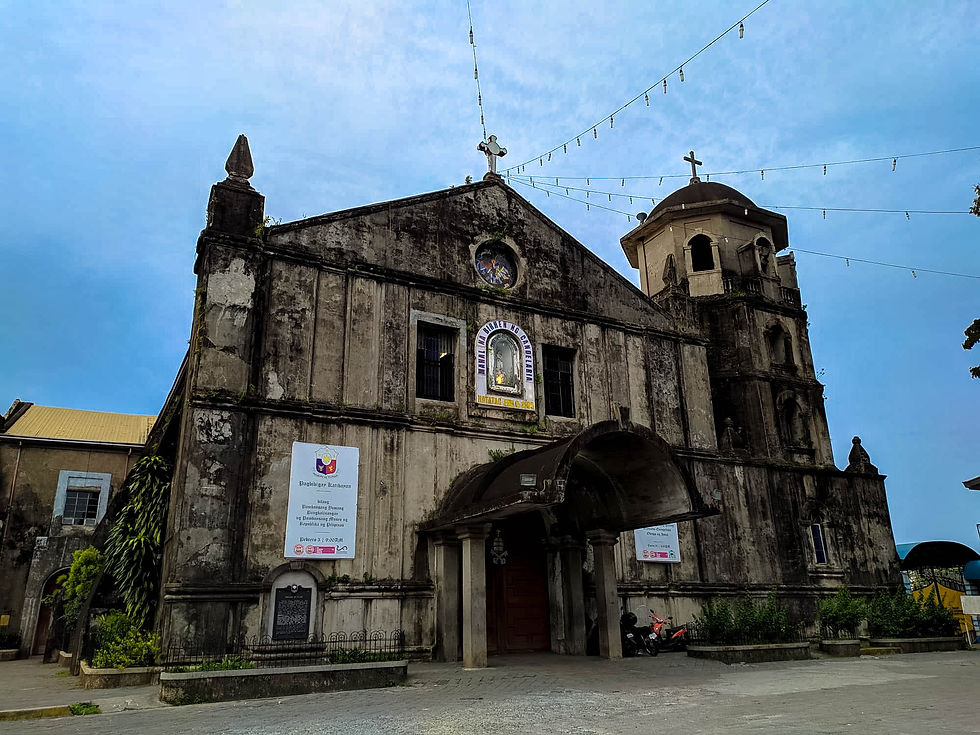

The Diocesan Shrine and Parish of Our Lady of Candelaria, commonly known as Silang Church, is a Roman Catholic parish church in the municipality of Silang, in the province of Cavite, Philippines, under the Diocese of Imus. Its title is Our Lady of Candelaria (also Our Lady of Candles). The church is known for its Spanish colonial architectural style and the rococo-influenced retablos. It is the oldest existing stone church in the province of Cavite, having been completed in 1639.
The church and retablo of the Our Lady of Candelaria Parish were declared a National Cultural Treasure by the National Museum of the Philippines on February 3, 2017.
The Franciscans started evangelizing Silang in 1585 with the permission of Cristobal de Salvatierra. After ten years, the parish was established on February 3, 1595. They built a small chapel made of light materials dedicated to Saint Diego of Alcalá and a small school, and took charge of Silang until 1611. Due to the request of an encomendero (grantee of an encomienda), Capt. Diego Jorge de Villalobos, to the rector of the Society of Jesus in Manila, the Jesuits to Silang in May 1599. The first Jesuits in town were Diego Sanchez and Diego de Santiago. The first two Jesuits were followed by Luis Gomez, Francisco Almerici, Pedro Chirino, and Leonardo Scelsi. The church and school built by the Franciscans were destroyed by fire on August 30, 1603. With a new order of priests to administer, the church and school previously built by the Franciscans were transferred to a new location and made even larger. The stone church was built from 1637 to 1639 under the auspices of Juan de Salazar and was dedicated to the Nuestra Señora de Candelaria in 1640.[4][6] When the Jesuits were expelled from the Spanish colonies, the parish was taken over by the secular clergy in 1788, the Augustinian Recollects in 1849, back to the secular clergy in 1868, the Congregation of the Immaculate Heart of Mary (CICM) in 1910, seculars in 1913, Columbans in 1936, and has been administered by the secular clergy since 1978.
It has a four-story belfry connected to the main church. The first floor is four-sided, while the rest of the floors are octagonal. The fourth story of the belfry was destroyed in the 1880 earthquake and was only restored to its original height in 1989, after a hundred years.
𝐍𝐨𝐭𝐚𝐛𝐥𝐞 𝐒𝐢𝐥𝐚𝐧𝐠 𝐡𝐢𝐬𝐭𝐨𝐫𝐲
Silang originally belonged to the encomienda (land grant) of Diego Jorge de Villalobos; his claim extended to what is today the towns of Carmona, Amadeo, Indang, Alfonso, General Trias, and Tanza. On February 3, 1595, the parish of Silang was established, formally creating the town.
𝐏𝐥𝐚𝐜𝐞𝐬 𝐭𝐨 𝐬𝐞𝐞 𝐢𝐧 𝐒𝐢𝐥𝐚𝐧𝐠:

- The Diocesan Shrine and Parish of Our Lady of Candelaria
- Divine Mercy Parish Church - Biluso
- Paligawan Falls
- Naalon Falls
- Sabutan Water Falls
- Cabag Cave & Falls
- The Old Buddies' Farmhouse and Resort
- Waterscape Resort
- St. Benedict Parish
- Acienda Designer Outlet Mall
- Gratchi's Getaway
- Cornerstone Pottery Farm
- Perlas ng Silang
- Gourmet Farms
- Ilog Maria Honeybee Farm
- Ayong's Adventure Park
- Korean Temple Silang
𝐅𝐚𝐦𝐨𝐮𝐬 𝐧𝐚𝐭𝐢𝐨𝐧𝐚𝐥 𝐡𝐞𝐫𝐨𝐞𝐬 𝐛𝐨𝐫𝐧 𝐢𝐧 𝐒𝐢𝐥𝐚𝐧𝐠:
- Vito Belarmino y Loyola (was a Filipino general during the Philippine Revolution. During the revolution, he was codenamed "Walang Gulat" by fellow Katipuneros. He was placed by Emilio Aguinaldo in command of the province of Albay. There, he established a republican government. He was a Major General.)
𝐏𝐢𝐧𝐨𝐲 𝐜𝐞𝐥𝐞𝐛𝐫𝐢𝐭𝐢𝐞𝐬, 𝐤𝐧𝐨𝐰𝐧 𝐩𝐞𝐫𝐬𝐨𝐧𝐚𝐥𝐢𝐭𝐢𝐞𝐬 𝐢𝐧 𝐒𝐢𝐥𝐚𝐧𝐠:
- None in the list


Comments